
In the digital landscape, the phrase “User Experience” (UX) often conjures images of wireframes, heatmaps, and sleek minimalist interfaces. We focus intensely on the visual and the functional. However, there is a silent architect behind every successful digital product that often goes unnoticed: Descriptive Writing.
While UX writing is often associated with microcopy—those tiny snippets of text on buttons or error messages—descriptive writing is the strategic engine that drives empathy, clarity, and accessibility. It is the bridge between a cold piece of software and a human experience.
The Convergence of Narrative and Interface
At its core, UX design is about guiding a user through a journey. Whether they are purchasing a subscription or navigating a complex dashboard, they are following a narrative. Descriptive writing provides the “sensory details” of this digital journey. It tells the user where they are, what they can do, and—most importantly—how they should feel about it.
In professional academic circles, this level of detail is paramount. For students struggling to articulate complex ideas, seeking a myassignmenthelp descriptive essay writing service is often the first step in learning how to paint a picture with words. In UX, we do the same; we paint a picture of functionality so the user never feels lost in the dark.
1. Building Empathy Through Imagery
Descriptive writing allows designers to step into the user’s shoes. By using evocative language, designers can create “Personas” that feel like real human beings rather than just demographic data points.
When a UX writer describes a user’s “frustration at a lagging checkout page” using sensory-specific language (the “anxious tapping of a finger,” the “searching eyes for a back button”), the design team can better visualize and solve the pain point.
2. The Power of “Show, Don’t Tell” in Digital Products
One of the golden rules of descriptive writing is “Show, Don’t Tell.” In UX, this translates to creating copy that illustrates the benefit of a feature rather than just its existence.
- Tell: “This app has a fast search engine.”
- Show: “Find exactly what you need in a heartbeat with our lightning-fast search.”
By using descriptive verbs and adjectives, you reduce the cognitive load on the user. They don’t have to think about what the feature does; they can see the result in their mind’s eye.
The Accessibility Angle: Descriptive Writing as a Necessity
Descriptive writing isn’t just about aesthetics; it’s a pillar of web accessibility (A11y). For users with visual impairments, descriptive writing via Alt-Text and screen readers is the only way they experience the interface.
According to data from the World Health Organization, approximately 2.2 billion people have a near or distant vision impairment. For these users, a button that says “Click Here” is useless. A button described as “Submit your final thesis for grading” provides the necessary context to navigate safely.
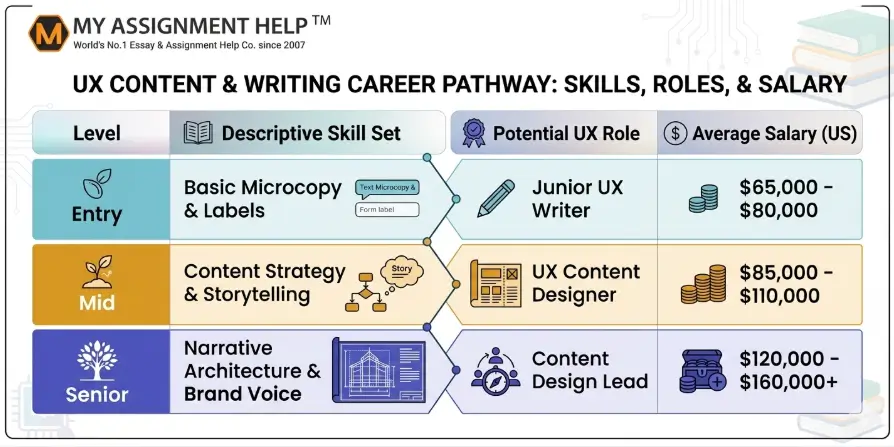
For many students overwhelmed by these technicalities, the thought “can you do my homework” often arises when they realize the depth of detail required for inclusive design projects. Mastering this level of descriptive precision is what separates a junior designer from a senior UX strategist.
Data-Driven Impact: Why Words Matter
Does descriptive writing actually impact the bottom line? The data suggests yes.
- Conversion Rates: A study by Baymard Institute found that 18% of users abandon carts due to a “too long/complicated checkout process.” Descriptive microcopy that guides the user through each step can reduce this friction.
- Trust and Retention: Research published in the Journal of Consumer Research indicates that detailed, descriptive product descriptions increase “perceived ownership” before a purchase is even made, leading to higher conversion rates.
Implementing Descriptive Techniques in Your Workflow
To weaponize descriptive writing in your UX designs, follow these steps:
- Audit Your Microcopy: Replace generic terms (Submit, OK, Cancel) with descriptive actions (Create Account, Let’s Go, Discard Changes).
- Sensory Personas: When building user journeys, describe the environment. Is the user in a noisy coffee shop? Are they on a dim bus? Write for that environment.
- The Alt-Text Challenge: Try navigating your prototype with a screen reader. If the descriptions don’t make sense, your writing isn’t descriptive enough.
Key Takeaways
- Empathy is Key: Descriptive writing helps designers visualize user frustrations and needs more vividly.
- Accessibility is Not Optional: It is the primary way visually impaired users interact with your product.
- Boosts ROI: Clear, descriptive language reduces cart abandonment and increases user trust.
- Show, Don’t Tell: Focus on the benefits and the “feeling” of the action, not just the technical function.
See also: Education Technology Trends
FAQ Section
Q: Is descriptive writing the same as creative writing?
A: Not quite. While it uses creative elements (like imagery), in UX, it must remain concise. The goal is to provide clarity, not to write a novel.
Q: How does descriptive writing help with SEO?
A: Google’s algorithms increasingly prioritize “Helpful Content.” Descriptive, high-quality writing improves dwell time and reduces bounce rates, which are positive signals for search rankings.
Q: Can AI handle descriptive UX writing?
A: While AI can generate descriptions, it often lacks the nuanced empathy and brand-specific “voice” that a human writer provides. Human oversight is essential for E-E-A-T.
Author Bio
Jane Doe, Senior Content Strategist at MyAssignmentHelp
Jane has over a decade of experience in digital marketing and academic content strategy. Specializing in the intersection of linguistics and user experience, she helps students and professionals alike master the art of persuasive and descriptive communication. When she’s not auditing site architectures, she’s advocating for inclusive design standards globally.
References:
- Baymard Institute (2024). E-Commerce Checkout Usability Trends.
- World Health Organization (2023). Vision Impairment and Blindness Fact Sheet.
- Nielsen Norman Group (2023). The Role of Narrative in UX.