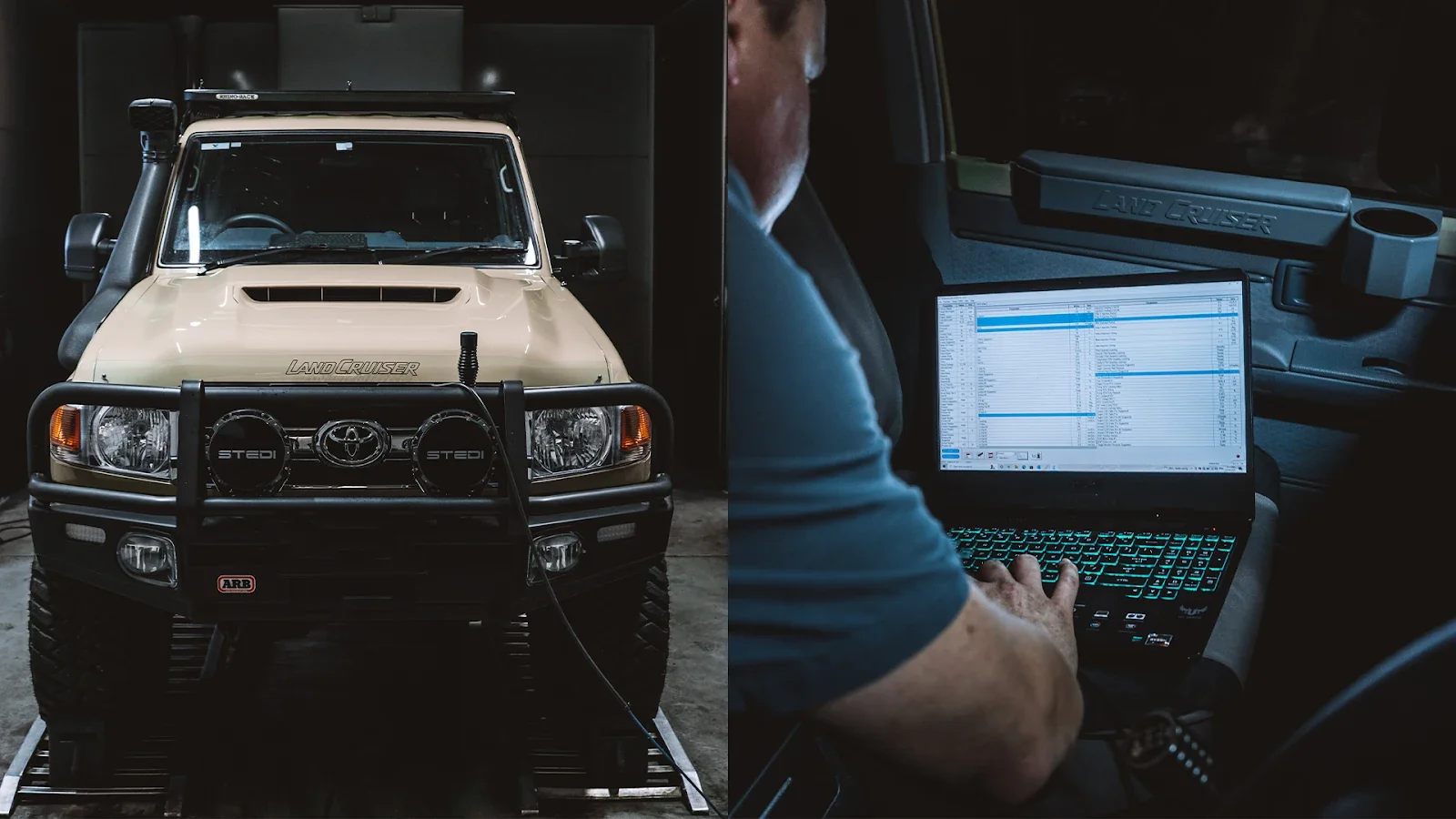
A diesel engine can feel very different after its engine control software has been recalibrated. Throttle response may improve, torque can arrive earlier, and the vehicle may feel less strained under load.
That is the basic idea behind diesel ECU remapping. Rather than replacing major mechanical components, the engine’s existing electronic control system is recalibrated to change how the engine operates.
The results depend heavily on the vehicle, engine condition, existing hardware, and quality of the calibration. A sensible remap should be developed around the vehicle rather than treated as a universal software file.
What Is Diesel ECU Remapping?
Modern diesel engines use an ECU, or engine control unit, to manage various operating parameters.
Depending on the engine and manufacturer, these can include fuel injection, injection timing, turbocharger boost, torque limits, throttle response, exhaust gas management, and other functions.
An ECU remap changes selected calibration values within the software so the engine operates differently under specific conditions.
The objective is usually to increase usable torque and improve drivability while keeping the engine within sensible operating limits.
Why Diesel Engines Respond Well to Remapping
Turbocharged diesel engines often have considerable room for software-based calibration changes.
Manufacturers have to account for different markets, emissions requirements, fuel quality, transmission specifications, vehicle weights, and model variants. The original calibration also needs to meet durability and regulatory requirements across a wide range of operating conditions.
A professional tuner can adjust the calibration to suit a particular vehicle and its intended use.
For many drivers, the most noticeable change is not maximum horsepower. It is stronger mid-range torque and improved response when accelerating or climbing hills.
What Can Change After a Remap?
The exact changes vary between engines, but a remap may alter several aspects of engine behaviour.
Torque Delivery
Diesel engines are already known for strong torque. A suitable calibration can increase torque within a controlled operating range, making the vehicle feel more responsive.
This can be particularly noticeable during overtaking, hill climbs, and towing.
Throttle Response
Some vehicles can feel hesitant or slow to respond to accelerator input. Calibration changes can alter how the engine responds to driver input, making acceleration feel more immediate.
Turbocharger Control
The ECU can control turbocharger operation on many modern diesel engines. A remap may adjust boost targets and related control parameters.
These changes need to remain within the limits of the turbocharger and engine hardware.
Fuel Injection
Fuel quantity and injection timing can also be adjusted. More fuel does not automatically mean better performance, however. The available air, combustion temperature, injection system, and engine load all need to be considered.
Fuel Economy: What Should You Expect?
Fuel economy claims surrounding diesel ECU remapping should be treated carefully.
A remap may improve efficiency in certain driving conditions, particularly if increased torque allows the driver to maintain speed with less accelerator input. However, actual consumption depends on driving style, traffic, vehicle weight, tyres, terrain, and how frequently the additional performance is used.
A driver who uses the extra torque aggressively may see fuel consumption increase rather than decrease.
For this reason, fuel-saving claims should not be treated as guaranteed results.
Towing Can Be a Major Reason for Remapping
Additional mid-range torque can be useful for vehicles that regularly tow trailers, caravans, boats, or equipment.
A stronger torque curve can reduce the need for frequent downshifts and make hills easier to manage.
However, increased engine output also places additional demands on the transmission, clutch, cooling system, and drivetrain.
A tuning company should know how the vehicle is used before recommending a calibration. A family SUV used occasionally for towing has different requirements from a commercial vehicle that pulls heavy loads every week.
The Condition of the Engine Comes First
Software cannot repair worn mechanical components.
Before remapping, the vehicle should be checked for issues such as boost leaks, injector problems, turbocharger faults, cooling-system weaknesses, blocked filters, and other faults.
Remapping a vehicle with an existing mechanical problem can make that problem more noticeable or place additional stress on affected components.
A pre-tune diagnostic check is therefore a sensible part of the process.
Hardware Modifications Change the Tuning Requirements
A standard diesel engine and a heavily modified diesel engine should not receive the same calibration.
Changes such as larger turbochargers, upgraded intercoolers, exhaust systems, injectors, or fuel pumps can alter the engine’s requirements.
The calibration should account for these modifications.
For example, fitting a larger turbo may increase available airflow but can also change boost response. A modified fuel system may require different injection control. Simply applying a standard tuning file to a heavily modified engine is unlikely to produce the best result.
Transmission Limits Matter Too
Extra engine torque does not stop at the crankshaft.
It passes through the clutch, gearbox, driveshafts, differentials, and other drivetrain components. Some automatic transmissions also have their own torque limits and control strategies.
A significant torque increase can expose a worn clutch or increase stress on an ageing transmission.
For high-torque diesel applications, the tuning process should therefore consider the complete drivetrain rather than focusing solely on the engine.
Choosing a Diesel Tuning Specialist
Not all remapping services follow the same process.
A reputable provider should be able to explain what will be changed, what performance increase is expected, and how the calibration is matched to the vehicle.
Useful questions include:
- Is the vehicle diagnosed before tuning?
- Is the original ECU software backed up?
- Is the calibration specific to the engine and vehicle?
- Are emissions and legal requirements being respected?
- Can the vehicle be returned to its original calibration?
- Is performance verified after the remap?
Dyno testing can also provide useful information by showing power and torque before and after tuning, although road testing and diagnostics remain important.
Legal and Emissions Considerations
Diesel engines are subject to emissions regulations, and modifying ECU software can affect how emissions-control systems operate.
Owners should ensure that any diesel ECU remapping complies with the laws applicable to their location and vehicle.
Modifying or disabling emissions equipment may be illegal for road use and can create additional problems during inspections or testing.
A responsible tuning process should account for legal requirements rather than treating emissions systems as obstacles to be removed.
See also: Why Smart Businesses Treat Commercial Maintenance Services as a Business Priority
A Good Remap Should Suit the Vehicle
ECU tuning can change the way a diesel vehicle feels without requiring extensive mechanical modifications. Stronger torque, improved response, and altered power delivery are among the most common reasons owners choose a remap.
The quality of the result depends on the calibration, the condition of the engine, and the hardware supporting it.
For a daily driver, towing vehicle, commercial diesel, or modified performance build, the most useful tune is one designed around how the vehicle is actually used. Extra numbers on a dyno sheet matter less if the engine runs poorly, the transmission struggles with the added torque, or reliability suffers.
A well-developed diesel ECU remapping process should therefore begin with proper diagnostics, account for the vehicle’s mechanical condition, and finish with checks that confirm the calibration is working as intended.