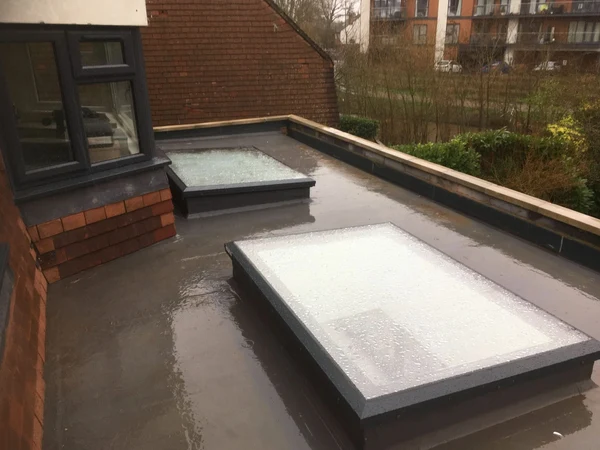
Natural daylight can completely transform the appearance and atmosphere of a home. Dark interiors can feel smaller and less inviting, while rooms filled with daylight often appear brighter, more spacious and comfortable. For homeowners extending a property, renovating a kitchen or improving a living area, affordable fixed flat rooflights for residential properties offer a practical way to introduce more natural light without the complexity of an opening roof system.
Fixed flat rooflights are non-opening glazed units designed primarily to provide daylight. Because they remain permanently sealed, they are particularly suitable for residential spaces where ventilation is already available through windows, doors or mechanical ventilation. Their simple construction can also make them a cost-effective option compared with opening rooflights.
What Are Fixed Flat Rooflights?
A fixed flat rooflight is a sealed glazed panel installed into a flat or low-pitched roof. Unlike an opening rooflight, it does not have hinges, motors or opening mechanisms. Its main purpose is to allow daylight to enter the room below.
Fixed rooflights are commonly used in:
- Kitchen extensions
- Living rooms
- Dining areas
- Home offices
- Hallways
- Stairwells
- Garden rooms
- Rear extensions
- Utility areas
- Loft and renovation projects
Modern fixed rooflights are available in framed and frameless designs, with different glazing options, sizes and finishes. Some products can be manufactured to bespoke dimensions, allowing homeowners and designers to match the rooflight to the proportions of the room and roof.
Why Choose Fixed Rooflights for a Home?
One of the biggest advantages of fixed rooflights is their ability to introduce daylight from above. A vertical window may brighten the area immediately beside it, but a rooflight can distribute daylight deeper into a room.
This can be particularly useful in flat-roof extensions where the room may have limited wall space for conventional windows.
A carefully positioned rooflight can also become an attractive architectural feature. Frameless or slim-frame designs provide a clean appearance and can complement contemporary residential architecture.
Affordable Alternative to Opening Rooflights
If ventilation is not required through the roof, a fixed unit can be a more affordable choice than an opening rooflight. Fixed designs have fewer components and no opening mechanism, which can simplify both the product and installation.
They also tend to require less ongoing maintenance because there are fewer moving parts to inspect or repair. Industry guidance similarly identifies fixed flat glass rooflights as one of the more cost-effective rooflight options for extensions.
For homeowners working within a defined renovation or extension budget, this can make fixed rooflights an attractive option.
However, affordability should not mean choosing a product based solely on its lowest purchase price. Glazing performance, installation requirements, durability and warranty should also be considered.
Benefits of Fixed Flat Rooflights
1. More Natural Daylight
The main reason homeowners install rooflights is to increase daylight.
A fixed rooflight can brighten areas that might otherwise depend heavily on artificial lighting. This can be particularly effective in deep-plan kitchens, open-plan living spaces and extensions.
Greater access to natural daylight can also reduce the need for artificial lighting during daylight hours, although the actual energy benefit depends on factors such as room design, occupancy and lighting controls.
2. Modern Appearance
Flat rooflights can provide a sleek and contemporary alternative to traditional roof lanterns.
Minimal-frame and frameless designs can create a clean transition between the glazing and surrounding roof. This makes them particularly popular in modern home extensions where homeowners want to maintain simple architectural lines.
3. Low Maintenance
Because fixed rooflights do not open, they have fewer mechanical components than opening systems.
There are no hinges, motors or opening controls to maintain. Regular cleaning and occasional inspection of the glazing, seals and surrounding roof are generally important for maintaining the system.
4. Good Thermal Performance
Energy efficiency is another important consideration when choosing a residential rooflight.
Modern fixed rooflights can incorporate double or triple glazing, low-emissivity coatings, argon-filled cavities and thermally improved frames. Some specialist fixed rooflight products can achieve strong thermal-performance specifications.
When comparing products, homeowners should check the stated U-value and determine whether it refers to the complete rooflight or only the centre of the glass.
5. Fewer Moving Parts
The simple design of a fixed rooflight can contribute to long-term reliability. Since the unit remains closed, there is no opening mechanism that can fail or require electrical power.
This can be particularly useful for rooflights installed in areas that are difficult to reach.
Fixed Rooflights vs Opening Rooflights
The main difference between the two options is ventilation.
A fixed rooflight provides daylight but cannot be opened. An opening rooflight provides both daylight and airflow.
For rooms such as living areas, dining spaces and corridors where ventilation is already adequately provided elsewhere, a fixed rooflight can be an efficient solution.
For kitchens, bathrooms or rooms where heat and moisture may accumulate, an opening rooflight may be more appropriate if additional ventilation is required.
Homeowners should therefore consider how the room will be used before choosing between the two.
Choosing the Right Glazing
Glazing has a major impact on the performance, appearance and cost of a fixed rooflight.
Double Glazing
Double glazing can provide a balance between thermal performance and affordability. It is suitable for many residential applications and can incorporate low-emissivity coatings and gas-filled cavities.
Triple Glazing
Triple glazing can provide greater thermal insulation and may be appropriate for highly insulated homes or projects where energy performance is a priority. However, it can also increase the initial cost and weight of the rooflight.
Solar-Control Glass
For rooflights receiving substantial direct sunlight, solar-control glazing can help manage solar heat gain. This can be especially important for large rooflights or installations where overheating could become a concern.
The best glazing specification depends on the property’s orientation, climate, roof design and overall energy strategy.
Safety Should Be a Priority
A rooflight is positioned overhead, so safety glazing is an important consideration.
For residential applications, the inner pane should be selected with safety in mind. Laminated glass is often recommended for the inner pane because the interlayer helps hold broken glass together rather than allowing fragments to fall into the room.
It is also important to understand that an ordinary fixed rooflight should not automatically be treated as walk-on glazing. If maintenance access or foot traffic is expected over the rooflight, a specially designed structural walk-on system should be specified.
Selecting the Right Size
The size of a rooflight can have a major effect on the appearance and performance of a room.
A larger rooflight can introduce more daylight, but increasing the glazed area can also influence solar heat gain, thermal performance and the overall appearance of the roof.
Rather than automatically selecting the largest available option, homeowners should consider:
- Room dimensions
- Ceiling height
- Roof orientation
- Existing windows
- Desired daylight levels
- Furniture layout
- Solar exposure
- Insulation levels
- Roof structure
A professional designer or installer can help determine the appropriate size and position.
Frameless or Framed Fixed Rooflights?
Both framed and frameless designs can work well in residential projects.
Framed rooflights provide a visible structural frame around the glazing. They can offer a practical balance of appearance, performance and cost.
Frameless rooflights provide a minimalist appearance with fewer visible borders. They are often selected for contemporary extensions where uninterrupted glazing is an important part of the design.
The choice should depend on the architectural style, budget, structural requirements and desired interior finish.
Installation on Flat Roofs
Correct installation is just as important as choosing the right rooflight.
A rooflight requires an opening to be created in the roof structure, and that opening must be properly integrated with the roof’s insulation, waterproofing and structural components.
Poor installation can result in:
- Water leaks
- Draughts
- Condensation
- Thermal bridging
- Damage to roof membranes
- Reduced energy performance
The rooflight should therefore be installed according to the manufacturer’s requirements and by a suitably experienced professional.
The dimensions of the structural opening should also be confirmed before ordering. The required opening size is not necessarily identical to the external or visible glass dimensions.
What to Check When Buying Affordable Fixed Rooflights Online
When searching for affordable fixed flat rooflights for residential properties, homeowners should compare the complete specification rather than focusing only on price.
Important factors include:
U-value: Look for information about the thermal performance of the complete rooflight assembly.
Glazing: Compare double- and triple-glazed options and consider low-emissivity or solar-control coatings where appropriate.
Safety: Confirm that the glazing specification is suitable for overhead use.
Dimensions: Check the manufacturer’s structural opening requirements carefully.
Frame: Compare framed and frameless options according to appearance, performance and budget.
Roof compatibility: Make sure the product is suitable for the specific flat-roof construction.
Weather resistance: Check the product’s resistance to water and air penetration.
Warranty: Review the product warranty and any requirements relating to professional installation.
Maintenance: Consider how easily the rooflight can be cleaned and inspected.
Are Fixed Rooflights a Good Investment?
For many homeowners, fixed rooflights offer an attractive combination of affordability, daylight and simplicity.
They can improve the atmosphere of a dark extension without requiring an expensive opening mechanism. Their sealed design can also provide good thermal performance when combined with appropriately specified glazing and insulation.
However, the best value comes from considering the complete installation rather than the rooflight alone. A high-performance product installed incorrectly may not deliver its expected benefits.
The surrounding roof insulation, waterproofing, frame, glazing and installation details should all be treated as part of one system.
See also: How to Turn a Business Idea into Reality
Conclusion
Affordable fixed flat rooflights for residential properties provide a simple and effective way to bring natural daylight into modern homes. They are particularly suitable for flat-roof extensions, kitchens, living rooms, home offices and other spaces where ventilation can be provided through alternative means.
Their non-opening design can make them more affordable and easier to maintain than opening rooflights, while modern glazing options can provide excellent thermal performance and a contemporary appearance.
When choosing a fixed rooflight, homeowners should look beyond the initial price and consider glazing, U-value, safety, size, roof compatibility, installation and long-term maintenance. With the right product and professional installation, a fixed flat rooflight can provide years of natural daylight while adding a stylish feature to a residential property.