A comprehensive guide for founders and engineering leaders building resilient, scalable, and cost-efficient digital products in the modern cloud landscape.
In the fast-paced technology ecosystem, the margin between startup success and failure often hinges on execution speed, market adaptability, and operational efficiency. Early-stage startups no longer have the luxury of spending months building foundational server infrastructures or managing physical hardware. Today’s market demands rapid feature releases, zero-downtime deployments, and immediate scalability to meet fluctuating user demands.
To achieve this level of agility, forward-thinking startups are abandoning legacy architecture in favor of cloud native product development. By combining cloud-native architectural patterns with targeted cloud solutions for startups, emerging tech companies can build enterprise-grade applications from day one without incurring enterprise-sized overhead costs.
This article explores how early-stage businesses can leverage cloud-native principles to accelerate time-to-market, optimize operating expenses, and construct a technical foundation built for rapid global scaling.
What is Cloud Native Product Development?
Cloud native product development refers to the methodology of designing, building, and running software applications specifically engineered to exploit the extraordinary elasticity and distribution of the cloud computing model.
Rather than taking a traditional monolithic application and simply hosting it on a virtual machine (often called a “lift-and-shift” approach), cloud-native applications are constructed from the ground up using microservices, containers, serverless components, and automated continuous integration/continuous deployment (CI/CD) pipelines.
Traditional Monolithic Architecture:
[ UI Layer ] <—> [ Monolithic Business Logic ] <—> [ Central Database ]
(Slow deployments, single point of failure, rigid scaling)
Cloud-Native Microservices Architecture:
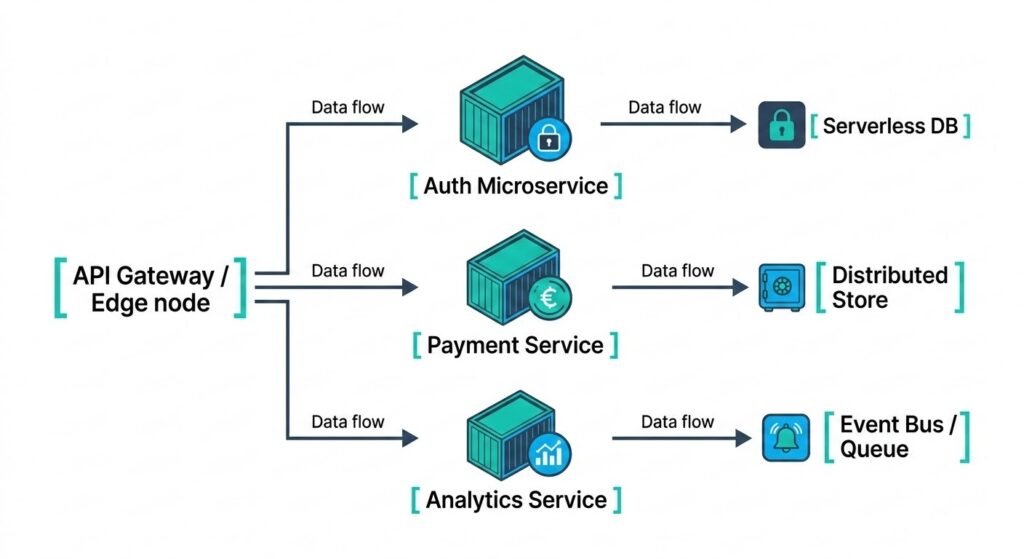
(Independent releases, continuous scaling, isolated fault domains)
The 4 Pillars of Cloud-Native Architecture
- Microservices Architecture: Applications are broken down into small, loosely coupled, independent services. Each service handles a specific business function and communicates via light APIs.
- Containerization: Technologies like Docker package applications along with their dependencies into isolated units, ensuring seamless performance across development, staging, and production environments.
- Dynamic Orchestration: Tools like Kubernetes automate the deployment, scaling, management, and recovery of containerized applications.
- Serverless & Event-Driven Computing: Services such as AWS Lambda allow developers to execute code without provisioning or managing servers, paying strictly for the precise execution time used.
Monolithic vs. Cloud-Native Development
| Architectural Attribute | Traditional Monolithic Approach | Cloud Native Product Development |
|---|---|---|
| Deployment Speed | Infrequent releases (weeks or months) | Continuous releases (multiple times per day) |
| Scalability | Vertical scaling (adding CPU/RAM to a single server) | Horizontal auto-scaling based on real-time traffic |
| Fault Tolerance | Single component crash can take down entire system | Isolated failures; remaining services function normally |
| Cost Structure | High fixed infrastructure expenses | Pay-as-you-go elastic consumption models |
| Infrastructure Management | Manual provisioning and custom configurations | Automated Infrastructure as Code (IaC) |
Essential Cloud Solutions for Startups
Navigating the vast ecosystem of cloud infrastructure can be overwhelming for early-stage teams. Startups must balance the need for rapid feature development with strict budget constraints and lean engineering teams. Tailored cloud solutions for startups focus on eliminating administrative friction, automating maintenance, and ensuring predictable cost governance.
1. Managed Container & Orchestration Platforms
Managing bare-metal Kubernetes clusters requires dedicated site reliability engineering (SRE) resources. For early-stage companies, managed Kubernetes platforms—such as Amazon EKS, Google GKE, or Azure AKS—provide enterprise-grade container management without the operational burden. They automatically handle master node maintenance, security updates, and automated node pool scaling.
2. Infrastructure as Code (IaC)
Manual server configuration leads to configuration drift, security vulnerabilities, and deployment bottlenecks. Implementing IaC frameworks like Terraform, Pulumi, or AWS CloudFormation allows startups to define their entire cloud infrastructure using declarative code. This ensures reproducible environments, simplified disaster recovery, and clear version control over infrastructure changes.
3. Automated CI/CD Pipelines
Speed to market requires rapid feedback loops. Automated deployment pipelines integrated directly into code repositories (such as GitHub Actions or GitLab CI) run automated tests, vulnerability scans, and deployment scripts every time code is committed. This guarantees that software updates are delivered to users safely and reliably.
4. Continuous Cost Optimization & Governance
One of the most common pitfalls for growing tech companies is cloud spend inflation. Without active management, serverless function invocation, unattached block storage, and over-provisioned database instances can quickly erode operating margins. Modern startup cloud frameworks incorporate automated cost monitoring, budget alerts, and right-sizing recommendations.
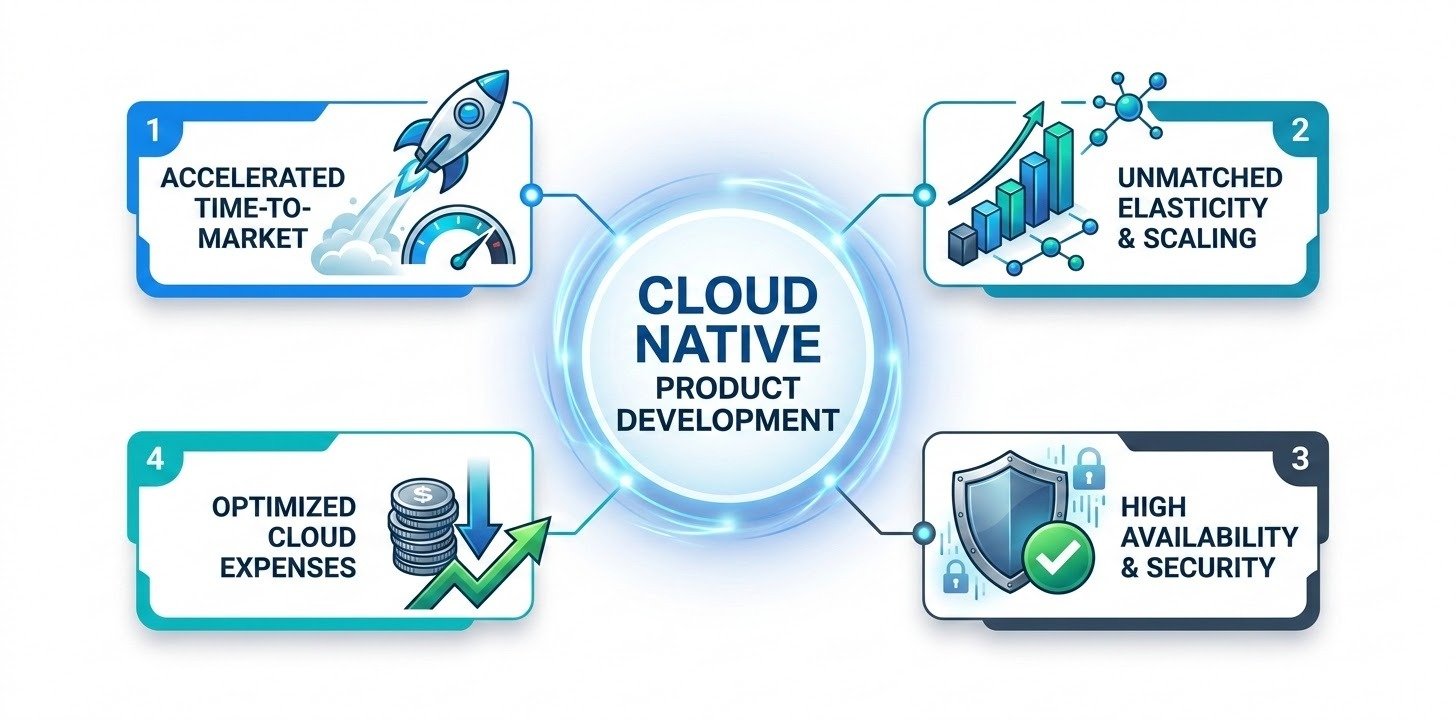
Strategic Advantages: Why Startups Must Adopt Cloud-Native Architecture Early
Adopting cloud-native patterns from the inception of a startup delivers distinct competitive advantages that directly impact core business metrics and valuation.
1. Accelerated Time-to-Market
In startup competition, speed is paramount. Cloud-native development allows modular engineering teams to work on separate microservices concurrently without blocking each other. Developers can prototype, test, and release individual components independently, drastically shortening feature delivery timelines.
2. Unmatched Elasticity and Auto-Scaling
Whether experiencing a sudden viral spike in traffic or seasonal demand fluctuations, cloud-native infrastructures automatically scale resources up or down in real time. Systems seamlessly absorb traffic surges without manual engineer intervention, preventing downtime and revenue loss.
3. Capital Efficiency & Cost Elasticity
For seed and Series A startups, preserving runway is essential. Cloud-native designs leverage pay-as-you-go architectures and serverless models, ensuring you only pay for resources actively servicing users. During off-peak hours, infrastructure costs naturally scale down to baseline levels.
4. Enterprise-Grade Security and Compliance
Building secure applications from day one is critical, particularly for startups operating in Fintech, Healthtech, or SaaS sectors. Cloud-native frameworks support modern zero-trust security architecture, end-to-end encryption, automated compliance logging, and identity-based access control.
Step-by-Step Implementation Roadmap for Startups
Transitioning to or building on a cloud-native platform requires a clear, structured methodology. Below is a practical step-by-step roadmap for startup engineering leaders.
Phase 1: Architecture Blueprinting & Strategy
Before writing code, assess product requirements to choose the right mix of managed cloud services. Define service boundaries, database requirements (relational vs. NoSQL), and initial security policies.
Phase 2: Containerization & Local Development Setup
Standardize local development environments using Docker. Ensure that every developer works in a containerized environment identical to the staging and production setups to eliminate “works on my machine” issues.
Phase 3: Infrastructure Automation & Pipeline Setup
Establish Infrastructure as Code (IaC) templates and configure CI/CD workflows. Automate unit testing, integration testing, container security scanning, and deployment stages to ensure seamless continuous delivery.
Phase 4: Observability, Monitoring & Cost Control
Deploy centralized logging and metrics collection tools (e.g., Prometheus, Grafana, AWS CloudWatch). Implement automated alerts for system performance anomalies and cost threshold breaches.
Startup Cloud Adoption Checklist
| Execution Phase | Key Milestone | Key Deliverables |
|---|---|---|
| Phase 1 | Architectural Assessment | Cloud platform selection, service boundary definition |
| Phase 2 | Containerization | Dockerfiles, container repository setup |
| Phase 3 | Automated Pipelines | CI/CD build scripts, Infrastructure as Code scripts |
| Phase 4 | Monitoring & Governance | Real-time dashboards, cost alerts, automated backup policies |
Accelerating Your Cloud Journey with EaseCloud
While cloud-native architecture offers massive strategic benefits, managing cloud complexity, container orchestration, and continuous security requires deep technical expertise. Early-stage startups often face a choice between spending valuable time managing complex infrastructure or diverting engineering resources away from core product innovation.
This is where specialized technical partners provide critical support. EaseCloud serves as a dedicated cloud consulting and engineering partner for growing companies worldwide. By providing tailored startup cloud strategies, automated DevOps setup, Docker and Kubernetes orchestration, and continuous 24/7 cloud support, EaseCloud helps teams reduce infrastructure complexity and cut cloud expenses by up to 40%.
By relying on certified experts to architect, optimize, and maintain your cloud environments, your core engineering team remains 100% focused on what matters most: building innovative features, acquiring customers, and growing your business.
Frequently Asked Questions (FAQs)
What is the difference between cloud-hosted and cloud-native applications?
Cloud-hosted applications are traditional applications running on cloud virtual machines without taking advantage of cloud-elasticity or microservices (“lift-and-shift”). Cloud-native applications are specifically engineered to leverage cloud features like automated scaling, container orchestration, serverless execution, and dynamic microservices architecture.
Are cloud solutions for startups too expensive for early-stage, seed-funded companies?
No. When architected correctly using modern serverless models and auto-scaling container configurations, cloud solutions for startups are highly cost-effective. You only pay for active resource consumption, preventing early over-investment in unused server capacity.
How does containerization with Docker and Kubernetes benefit a growing startup?
Containerization ensures that your application runs identically across all environments, eliminating deployment bugs. Kubernetes automates application scaling, load balancing, and self-healing (restarting failed containers automatically), enabling small startup teams to manage high-traffic systems effortlessly.
How can startups prevent unexpected cloud bill surprises?
Startups can control cloud costs by implementing automated budget thresholds, using Infrastructure as Code to prevent orphan resources, utilizing reserved instances or savings plans for predictable workloads, and conducting regular cloud cost optimization reviews with certified cloud experts.