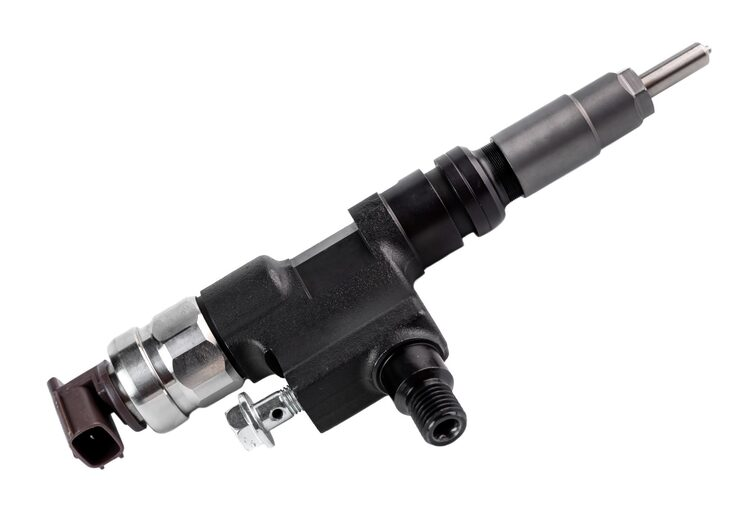
A diesel engine depends on precise fuel delivery. The injection pump has the demanding job of supplying fuel at the required pressure and timing so the injectors can deliver the right amount into the combustion chamber.
Understanding fuel injection pump parts can make troubleshooting, servicing, and parts selection much easier. Different diesel systems use different pump designs, so the exact components vary between mechanical inline pumps, rotary pumps, common-rail systems, and electronically controlled units.
What Does a Diesel Injection Pump Do?
A traditional mechanical injection pump meters diesel fuel and delivers it to the injectors at high pressure.
The pump must control both how much fuel reaches the engine and when it is delivered.
Small changes in fuel quantity or injection timing can affect starting, idle quality, smoke, power, fuel consumption, and overall engine behaviour.
Modern common-rail systems work differently. A high-pressure pump supplies fuel to a common rail, while electronically controlled injectors determine when and how much fuel enters the cylinders.
The Pump Housing Holds Everything Together
The housing forms the main body of the injection pump.
It contains and supports many of the internal components while providing passages for fuel movement and lubrication.
The housing needs to maintain accurate internal clearances and withstand the pressures and operating conditions produced by the pump.
Damage, corrosion, or wear to the housing can affect the pump’s ability to maintain proper fuel delivery.
Plunger and Barrel Assemblies
Mechanical diesel pumps commonly use a plunger and barrel assembly to generate high fuel pressure.
The plunger moves within the barrel with extremely tight tolerances. As it moves, it pressurises fuel and controls its delivery to the injector.
Because the clearances are so small, contamination can cause significant wear.
A worn plunger and barrel can contribute to poor starting, reduced power, excessive smoke, uneven running, or fuel delivery problems.
These components generally require careful inspection and specialist testing rather than casual replacement.
Delivery Valves Control Fuel Discharge
The delivery valve controls the movement of pressurised fuel from the pump toward the injector.
It helps manage the pressure and prevents unwanted fuel movement back toward the pumping element.
The valve must operate correctly at the required timing and pressure.
Wear or damage can affect injection characteristics and may result in inconsistent fuel delivery between cylinders.
Camshaft Drives Pump Operation
Many mechanical injection pumps use an internal camshaft to operate the pumping elements.
The cam profile determines how the pumping components move and therefore influences injection timing and delivery characteristics.
Bearings, cam surfaces, and related components can wear over time.
Incorrect timing or mechanical wear can cause difficult starting, poor performance, excessive smoke, or unusual operating behaviour.
Governor Controls Engine Fuel Delivery
Mechanical diesel pumps may use a governor to regulate fuel delivery according to engine speed and load.
The governor helps prevent uncontrolled engine speed increases and allows the pump to respond as engine conditions change.
Different governor designs are used depending on the engine and application.
Problems within the governor mechanism can cause unstable idle, poor throttle response, excessive fuel delivery, or difficulty controlling engine speed.
Rack and Control Mechanisms
The fuel rack is another important component in many inline mechanical pumps.
Its movement changes the position of the pumping elements and therefore controls fuel delivery.
The rack connects the driver’s throttle input with the pump’s fuel-control mechanism.
If the rack becomes worn, stuck, or incorrectly adjusted, the engine may experience poor throttle response or inconsistent fuelling.
Because incorrect adjustment can have serious consequences, pump calibration should be performed using the manufacturer’s specifications.
Seals Prevent Fuel and Oil Leaks
Injection pumps contain several seals and O-rings.
Their job is to keep fuel inside the appropriate passages and prevent external leaks or unwanted contamination.
Over time, seals can harden or deteriorate due to heat, age, fuel exposure, and normal use.
A small leak around an injection pump may appear insignificant, but it can indicate a deteriorating seal or another underlying problem.
Bearings and Bushes Support Moving Parts
Injection pumps contain rotating and reciprocating components that require proper support.
Bearings and bushes maintain the correct position of shafts and other moving components.
Excessive wear can create unwanted movement and affect pump operation.
During a rebuild, these components should be inspected rather than assuming that only the obvious fuel-delivery parts require attention.
Timing Components Matter
Fuel injection timing has a direct relationship with engine operation.
Depending on the engine, the injection pump may be driven by gears, a belt, chain, or another mechanical arrangement.
Timing components need to be correctly aligned during installation.
Even a mechanically sound pump can cause engine problems if it is installed with incorrect timing.
Symptoms may include hard starting, excessive smoke, poor performance, or abnormal combustion noise.
Common Signs of Pump Problems
A failing injection pump does not always produce one obvious symptom.
Possible signs include:
- Difficult starting
- Poor acceleration
- Uneven idle
- Excessive exhaust smoke
- Loss of power
- Increased fuel consumption
- Fuel leaks
- Unusual pump noises
- Inconsistent engine performance
These symptoms can also be caused by injectors, filters, fuel lines, sensors, compression problems, or other engine components.
Testing the complete fuel system is therefore preferable to replacing pump parts based on symptoms alone.
See also: Why Smart Businesses Treat Commercial Maintenance Services as a Business Priority
Genuine and Replacement Parts
When purchasing fuel injection pump parts, compatibility matters.
Part numbers, pump model numbers, engine specifications, calibration requirements, and component dimensions should all be checked.
A component that physically fits may still have different flow characteristics or calibration requirements.
For mechanical pumps, internal components often need to be matched and calibrated as an assembly.
Pump Rebuilding Requires Precision
Injection pump rebuilding is not the same as replacing a conventional mechanical component.
Internal clearances are extremely small, and contamination can quickly damage newly installed parts.
A proper rebuild may involve disassembly, cleaning, measurement, replacement of worn components, assembly, calibration, and testing on specialist equipment.
The exact process varies according to the pump design.
Choose Parts Based on the Complete Pump
The injection pump works as a system. Plungers, barrels, delivery valves, governors, racks, seals, bearings, and timing components all contribute to fuel delivery.
For that reason, replacing one part without checking the condition of the surrounding components may not solve the original problem.
Correct identification is the starting point.
For anyone sourcing fuel injection pump parts, matching the exact pump and engine specifications and having critical components tested and calibrated can help ensure the rebuilt or repaired pump performs as intended.