Physical AI audio data collection hands robots and machines the hearing they need to function once they leave the lab. Plenty of embodied AI systems learn from camera footage and fake background noise, so they stumble the second a live alarm, a spoken order, or a failing motor enters the room. The cure is real, consented, labeled audio recorded inside the exact setting your model will run in. Humyn Labs gathers and annotates that audio using verified speakers and layered quality checks, so your system hears the world the same way your users do.
Where Do You Get Audio Data for Physical AI?
Get it from a specialist that captures genuine human speech and real surrounding sound under controlled conditions, then labels every file for your pipeline. Ready-made datasets are quick, yet they rarely fit your domain. Building in house tends to stall on recruiting and compliance. Managed collection through Humyn Labs voice data services brings you verified speakers across 50+ languages, full consent, and quality control, all scoped to your use case inside 48 hours.
Your Robot Can See. Can It Hear?
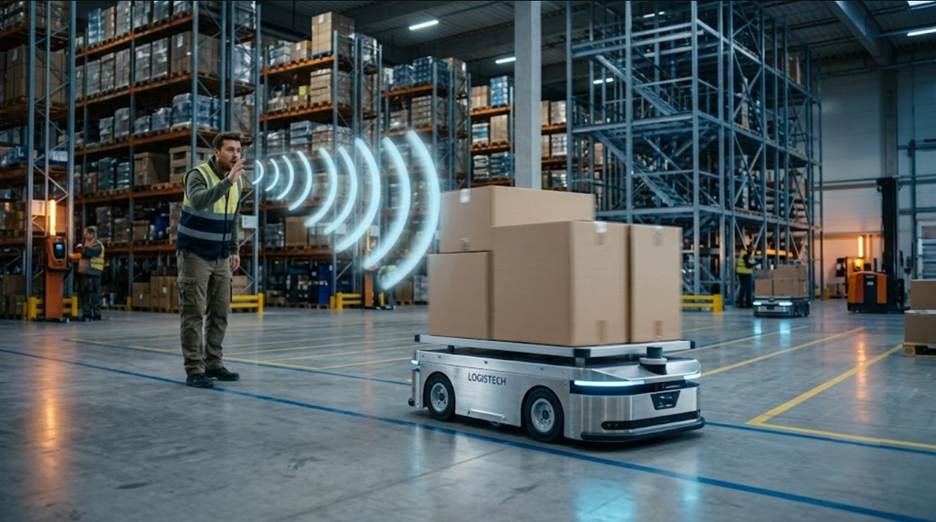
Picture a warehouse robot halfway through a shift. A worker shouts stop. The robot rolls on. It spotted the pallet. It never registered the human. On a spec sheet that gap looks tiny. On a factory floor it is anything but.
Most teams spend their budget on cameras and lidar. Sound gets treated as an extra. That call comes back to bite later, when a home assistant reads a smoke alarm as a doorbell, or a service robot misses an order spoken in an accent it never trained on. Vision shows a machine what sits in front of it. Audio tells it what is happening. You need both, not one.
The numbers make the case. The physical AI market stood at around USD 5.2 billion in 2025, and analysts expect it to climb past USD 80 billion by the mid-2030s, with a CAGR above 32%. The robots are already here. Tesla kicked off Optimus Gen 3 production in January 2026. Boston Dynamics placed electric Atlas units on Hyundai floors. These machines live in loud, crowded, human spaces. So demand for dependable physical AI sound data is rising every bit as fast as the robots it feeds.
See also: Education Technology Trends
What Physical AI Is and Why Audio Carries So Much Weight
Physical AI means intelligence built into a machine that acts in the real world. Picture robots, drones, self-driving forklifts, and humanoids. These systems do more than print answers on a screen. They grip, move, and respond, and when they get it wrong, the result is physical.
Now weigh everything sound carries in those rooms. A spoken order. A bearing that just began to grind. Glass shattering two aisles away. Someone calling for help. A motor humming off-key seconds before it quits. Cut the audio channel and your model runs half blind, no matter how sharp the cameras.
Audio Is a Primary Sensor, Not a Nice-to-Have
Modern robots lean on sensor fusion, the blending of many sensor feeds into one view. Vision, lidar, radar, IMU, and audio all pour into a single perception pipeline. A weak audio channel drags the whole stack down. You can map a room in flawless 3D and still ship a robot that ignores a shouted warning. That is why sharp teams treat audio data collection for physical AI as core infrastructure, right alongside their multi-sensor physical AI datasets.
Why Most Physical AI Sounds Deaf
Here is the blunt version. Most audio fed into these models is wrong for the job. So what goes wrong, exactly? Three things.
Synthetic Audio Cannot Fake a Real Room
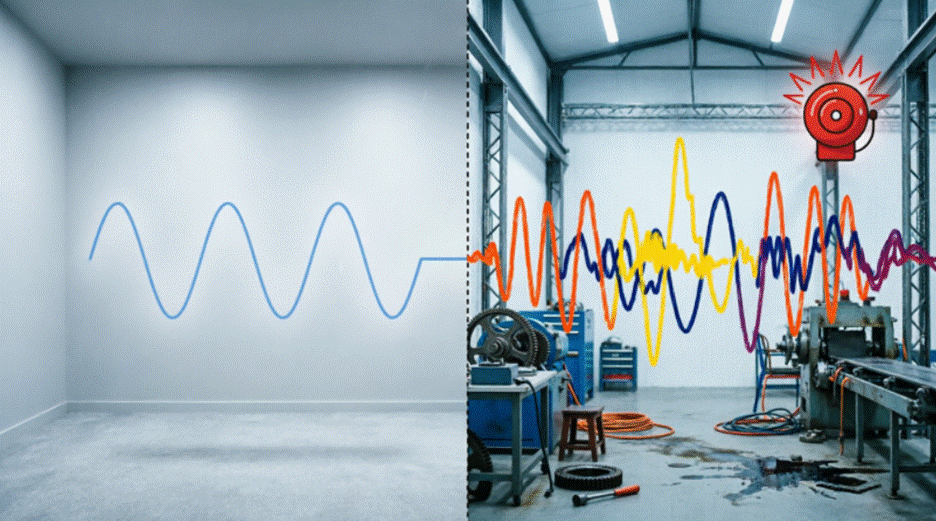
Lab-made and scraped audio sounds spotless. The real world never does. Actual rooms carry reverb, overlapping voices, the drone of an HVAC unit, and accents flying in from every corner. A model raised on neat studio clips walks into a working factory and breaks. That is the sim-to-real gap, the distance between simulated sound and the real thing, and for audio it cuts deep.
The Edge Cases Are Exactly the Ones That Matter
Alarms. Shattering glass. A panicked voice. Those rare sounds almost never appear in generic datasets, and they mark the exact moments when safety hangs in the balance. A robot that has never heard a fire alarm during training is a robot you cannot put near people.
Domain Mismatch Quietly Kills Accuracy
Audio captured in a silent booth will not survive a hospital corridor, a busy street, or a steel-walled plant. The acoustics shift. The background shifts. Even the vocabulary shifts. Train in one setting, deploy in another, and your command recognition sinks right when you lean on it most.
How Better Physical AI Audio Data Collection Fixes It
Now the upside. Every problem above shares one fix. Capture real audio, on purpose, in the right place, with the right people, and label it properly.
Capture in the Real Environment
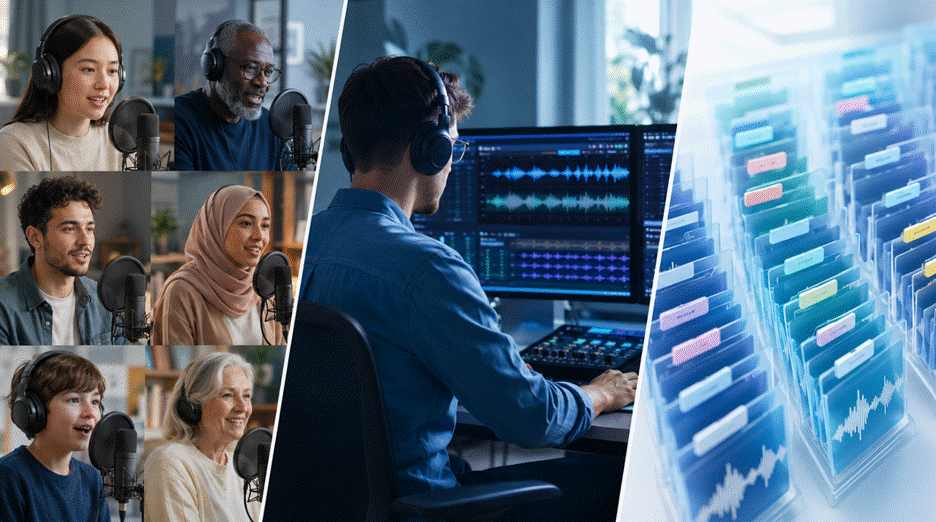
Record where the robot will truly work. A pick-and-place cell sounds nothing like a living room. Capturing audio on site closes the domain gap before it ever reaches your training set.
Build Diversity on Purpose
Accents, languages, age groups, distances, devices, and noise conditions belong in the dataset by design, never by accident. Humyn Labs records verified speakers across 50+ languages, with rich coverage of Indic languages such as Hindi, Tamil, Telugu, and Bengali, plus tight control over age, gender, accent, and dialect.
Label It So a Model Can Learn From It
Raw audio on its own is nearly useless. Your model needs timestamps, speaker tags, event labels, emotion markers, and clean transcription. That annotation step is where audio transcription and annotation turns a heap of recordings into training data that actually moves your numbers.
Source It With Consent and Provenance
Every speaker should give informed consent. Data handling should meet GDPR and regional privacy rules. Usage rights should be settled from day one. None of this is busywork. It keeps your model clear of legal trouble after launch, and it sits inside every Humyn Labs data collection project by default.
Where to Actually Get Physical AI Audio Data
You have three real paths. Here is how each one plays out.
Option 1: Build It Yourself
You can recruit speakers, buy the gear, run the recordings, and stand up a labeling pipeline in house. Some teams pull it off. Most get stuck. Between sourcing participants, hardware, annotation, and privacy compliance, this quietly swallows whole quarters of your roadmap. And that is before a single edge case lands on your desk.
Option 2: Off-the-Shelf Datasets
Public sets like LibriSpeech and Common Voice are quick and cheap. They also tilt hard toward English, thin out on demographic diversity, vary wildly in quality, and arrive wrapped in restrictive licensing. Handy for a prototype. Seldom enough for production.
Option 3: Custom Managed Collection
A specialist recruits the right speakers, records in the right rooms, and ships labeled, consented, deployment-ready audio. This is the route that launches products instead of stalling them. It is also exactly what Humyn Labs was built for, with verified domain experts and double-checked quality control on every dataset. Which raises a fair question: why a specialist over a generic crowd?
Why Humyn Labs and Not a Generic Crowd Platform
Plenty of vendors will label audio you already own. Far fewer will go capture the right audio first. Generic crowd platforms hand you anonymous workers, self-reported speaker details, and no traceability. You then burn months scrubbing noisy files that still lack the diversity your model needs. Humyn Labs takes a different path on the points that truly decide model quality:
- Verified speakers, real metadata. Identity-checked speakers with documented language, accent, dialect, age, and gender. No self-reported guesswork.
- Studio-grade standards. Set sample rate, bit depth, and noise floor. Files that miss the bar get rejected before they reach your pipeline.
- Layered quality control. Peer review plus centralized QC, with an added domain-expert pass for safety-critical work.
- On-chain reputation. Every expert’s record is proven and tracked, so quality stays accountable rather than anonymous.
- Real-world capture. Field teams record inside the messy settings your model must survive, not a silent booth.
What Better Audio Data Actually Buys Your Business
Set the technical detail aside. Here is what a decision-maker walks away with:
- Faster time to deployment. Start training on early batches instead of waiting on an in-house pipeline.
- Fewer safety failures. A robot that reliably catches alarms and orders is a robot you can place near people.
- Higher recognition accuracy. Real, varied audio lifts command and event recognition where it counts.
- Wider market reach. 50+ languages and true accent coverage open regions that generic datasets skip.
- Less rework. Clean, labeled, consented data means fewer painful retraining cycles down the line.
- Stronger user trust. Products that hear people correctly earn the trust that drives repeat use.
How to Choose an Audio Data Collection Partner
Run these questions to tell a real partner from a label shop:
- Can you capture audio inside my real deployment setting?
- Which languages, accents, and dialects do you cover, and how deep does that coverage run?
- How do you verify speaker identity and demographics?
- How do you manage informed consent and privacy from start to finish?
- Which annotation formats and labels do you deliver?
- How quickly can you scope a project and start shipping batches?
If a vendor stumbles on capture, consent, or QC, move on. The Humyn Labs team sends back a collection plan and sample recordings within 48 hours, so you can weigh quality before you commit a rupee or a dollar.
Common Mistakes to Avoid
- Treating audio as an afterthought behind vision and lidar.
- Training on synthetic or scraped clips that never match the real world.
- Skipping edge-case sounds like alarms and distress, the very ones safety rests on.
- Trusting self-reported speaker data with no verification.
- Leaving consent and provenance until a launch-day legal scramble.
Give Your Physical AI Ears Worth Having
Back to that warehouse robot, the one that kept rolling when a worker shouted stop. The answer was never a better camera. It was audio it could trust. Vision on its own is half a system. Real, varied, consented, well-labeled physical AI audio data collection is what separates a slick demo from a robot you can actually deploy.
Robots already work factory floors, and they are heading into homes next. The teams that win will be the ones whose machines hear the world clearly. So give yours ears worth having.
Ready to give your model real ears? Tell Humyn Labs your languages, demographics, and recording specs. You will have a collection plan and sample audio within 48 hours. Talk to Humyn Labs.
Frequently Asked Questions
What is physical AI audio data collection?
It is the work of recording genuine human speech and real surrounding sound for AI systems that act in the physical world, such as robots and autonomous machines, then labeling it so the model can learn. The audio gets captured under controlled, real-world conditions with verified speakers and full consent.
Why is real-world audio better than synthetic data for physical AI?
Synthetic audio sounds spotless and skips real reverb, overlapping voices, accents, and rare edge cases. Real-world audio carries the messy acoustics your robot will face on the job, which closes the sim-to-real gap and raises accuracy in deployment.
How much audio data does a physical AI model need?
It hinges on your use case, languages, and edge cases. A focused pilot often runs 50 to 100 hours, while production systems can need 1,000+ hours across several languages and conditions. Delivering in milestones lets you train on early batches.
What languages and accents should physical AI audio include?
Cover every language and accent your product will meet in the field, plus the noise conditions of the real setting. Humyn Labs records verified speakers across 50+ languages with full control over accent, dialect, age, and gender.
Is it better to collect audio in-house or use a partner?
Building in house gives control but usually stalls on recruiting, hardware, labeling, and privacy compliance. A managed partner ships verified, labeled, consented audio faster, which is why most teams pick custom collection for production.
How is privacy and consent handled in audio data collection?
Every speaker should give informed consent, and data handling should follow GDPR and regional privacy rules with clear usage rights from the outset. Humyn Labs bakes verified consent and provenance into every project.