Heating and cooling systems move large amounts of air through a building every day. Over time, dust, debris, pet hair, construction residue, and other particles can collect inside parts of the ductwork.
That does not mean every air duct needs frequent cleaning. In many buildings, ducts can operate for years without requiring professional attention. However, certain conditions can justify an inspection and, where necessary, professional duct cleaning.
Understanding what the service actually involves can help property owners decide when it makes sense.
What Happens Inside Air Ducts?
Air ducts form part of a larger HVAC system. Depending on the building, the system may include supply ducts, return ducts, grilles, registers, filters, coils, fans, and other components.
Dust can enter the system when filtration is poor, filters are overdue for replacement, construction work has taken place, or gaps and leaks allow unfiltered air into the ductwork.
Some debris remains around registers and accessible sections, while other material can accumulate deeper inside the system.
The amount of buildup varies significantly from one property to another.
When Should Ducts Be Inspected?
There is no universal schedule that requires every home or commercial building to have its ducts cleaned at the same interval.
An inspection may be worthwhile after renovation or construction, particularly if drywall dust, sawdust, insulation fibres, or other debris may have entered the HVAC system.
Visible mould-like growth, substantial dust buildup, pest activity, or a noticeable amount of debris coming from supply registers can also justify professional assessment.
Properties with significant dust, shedding pets, or a history of water damage may have different maintenance requirements.
Duct Cleaning Is Not the Same as Changing the Filter
Replacing an HVAC filter is one of the simplest maintenance tasks a property owner can perform.
The filter catches airborne particles before they circulate through the system. A clogged filter can restrict airflow and force the HVAC system to work harder.
Duct cleaning addresses a different part of the system.
If debris has accumulated inside the ductwork, professional equipment may be used to remove it. Both tasks can have a place in HVAC maintenance, but cleaning ducts does not replace the need for regular filter changes.
What Does Professional Duct Cleaning Involve?
A professional service typically begins with an inspection.
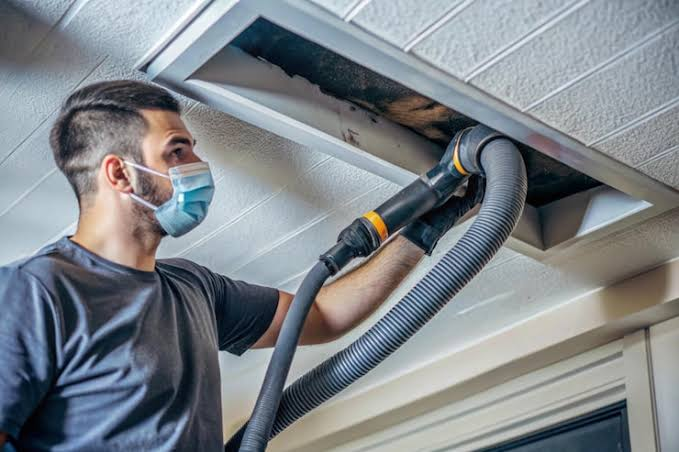
The technician should identify the accessible parts of the duct system and determine whether significant contamination is present. If cleaning is appropriate, specialised equipment can be used to loosen and collect debris.
Depending on the system, this may involve powerful vacuum equipment, agitation tools, brushes, and other devices designed for HVAC ductwork.
The aim is to collect loosened material rather than simply dislodge it and allow it to settle elsewhere in the building.
Supply and Return Ducts Both Matter
An HVAC system includes areas where conditioned air is supplied to rooms and areas where air is returned to the system.
Cleaning only visible supply registers may leave substantial contamination elsewhere.
A proper assessment should consider the wider system and determine which components actually require attention.
The technician should also protect surrounding areas during the work so loosened debris does not spread into occupied parts of the property.
What About HVAC Coils and Other Components?
Ductwork is only one part of an HVAC system.
Depending on the condition of the equipment, other components may require inspection or cleaning. Coils, blower components, drain pans, and other areas can accumulate dust or debris.
These components can affect system performance, so an HVAC inspection may identify maintenance needs beyond the ductwork itself.
However, duct cleaning companies and HVAC contractors may offer different services. Property owners should confirm exactly what is included before work begins.
Can Duct Cleaning Improve Airflow?
Heavy debris buildup can interfere with airflow, but the effect depends on the condition of the duct system.
If ducts are already relatively clean, cleaning them may produce little noticeable difference.
Poor airflow can also be caused by clogged filters, undersized ducts, damaged ductwork, blocked registers, blower problems, or HVAC equipment that is not operating correctly.
A professional should identify the actual cause rather than automatically recommending cleaning as the answer to every airflow problem.
What About Indoor Air Quality?
Removing accumulated debris from contaminated ductwork can reduce the amount of material available to circulate through the HVAC system.
However, duct cleaning should not be marketed as a cure for every indoor air quality problem.
Indoor air quality can also be affected by ventilation, humidity, cleaning products, combustion sources, outdoor pollution, filtration, building materials, and other factors.
A broader assessment may be appropriate where occupants are experiencing persistent indoor air concerns.
Choosing a Duct Cleaning Company
The quality of the service depends heavily on the equipment, methods, and experience of the contractor.
Before hiring a provider, ask what parts of the system will be cleaned and what equipment will be used.
A reputable company should be able to explain why cleaning is recommended and show evidence of significant contamination where practical.
Be cautious of companies making sweeping promises about guaranteed health improvements, dramatically lower energy bills, or instant HVAC performance gains.
The condition of the ductwork should determine whether cleaning is necessary.
See also: Why Smart Businesses Treat Commercial Maintenance Services as a Business Priority
Keep the HVAC System Clean Between Services
Regular maintenance can reduce the amount of debris entering the duct system.
Replace or clean filters according to the manufacturer’s recommendations and the conditions of the property. Homes with pets, renovation activity, or high dust levels may require more frequent attention.
Keep supply and return registers clear and avoid blocking them with furniture.
During construction or renovation, HVAC openings should also be protected where possible to prevent building dust from entering the system.
Know When Cleaning Makes Sense
Professional duct cleaning can be useful when ductwork contains substantial debris, has been affected by construction dust, shows signs of contamination, or has another specific issue that warrants cleaning.
It is not necessarily a service that every building needs on a fixed annual schedule.
The sensible approach is to inspect the system, identify the source and extent of contamination, and determine whether cleaning is likely to provide a practical benefit.
Keeping filters changed, maintaining HVAC equipment, controlling indoor dust, and addressing moisture problems can also help maintain a cleaner air distribution system over time.