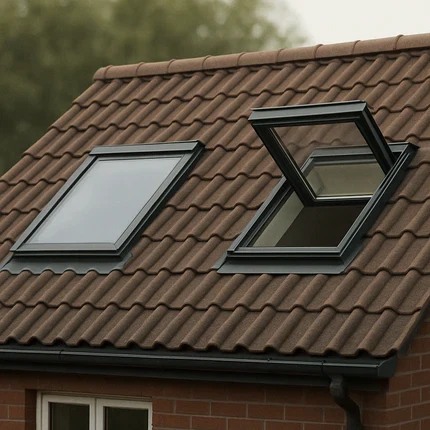
A pitched roof already has a natural advantage for bringing daylight into a building. Its angle can capture sunlight effectively, making it possible to introduce more daylight into lofts, extensions, kitchens, studios, workshops, and other spaces beneath sloping roofs.
Pitched rooflights can be used in both traditional and contemporary properties, with designs ranging from relatively discreet glazing panels to larger architectural roof windows.
The right choice depends on the roof structure, desired amount of daylight, ventilation requirements, glazing performance, and how the room will be used.
Why the Roof Pitch Matters
The angle of a roof affects how daylight reaches the glazing.
A rooflight installed within a pitched roof can capture light from above and introduce it deeper into the room. This can be particularly useful where vertical windows provide limited illumination.
The roof orientation also matters. A roof facing strong sunlight may receive more direct solar exposure, while another orientation may provide softer and more consistent daylight.
The ideal design should account for both daylight and heat rather than simply maximising the glazed area.
Roof Windows and Fixed Rooflights
Not every pitched rooflight needs to open.
Fixed rooflights are suitable where daylight is the primary objective. They have fewer moving components and can be appropriate for rooms that already have sufficient ventilation.
Opening roof windows provide additional airflow and can be useful in bedrooms, loft conversions, kitchens, and other occupied spaces where ventilation is desirable.
Manual and electrically operated systems are available, with the choice depending on accessibility, window position, and budget.
Natural Light Can Change a Loft
Loft rooms can often feel enclosed because the sloping roof limits conventional wall windows.
Installing pitched rooflights can introduce daylight directly through the roof plane and make the space feel brighter.
A rooflight can also provide a view of the sky, which can give a loft bedroom, home office, or living area a more open character.
The positioning should be considered alongside furniture and internal partitions. A rooflight hidden behind a tall cabinet will not provide the same benefit as one positioned over an open part of the room.
Size Is Only Part of the Design
Larger glazing generally allows more daylight into a room, but increasing the size indefinitely is not necessarily beneficial.
A very large rooflight can introduce excessive heat or glare, particularly on roofs that receive strong direct sunlight.
Several smaller rooflights may provide a more balanced spread of daylight than one oversized unit.
The room’s dimensions, ceiling height, orientation, existing windows, and interior finishes should all influence the final design.
Glazing Makes a Difference
The glass or glazing system affects thermal performance, daylight transmission, noise, safety, and solar gain.
Double-glazed units are commonly used where improved insulation is required. Low-emissivity coatings can help reduce heat transfer, while solar-control glazing may be useful on roofs with significant sun exposure.
Safety glazing may also be required depending on the rooflight’s position and installation.
The specification should comply with applicable building regulations and manufacturer requirements.
Ventilation Can Be Useful
Opening pitched rooflights can provide natural ventilation by allowing warm air to escape through the higher part of a room.
This can be useful in lofts and upper-floor spaces, where heat can accumulate.
A combination of lower-level windows and higher roof windows can create natural airflow through the building.
However, ventilation requirements vary between rooms and buildings. A roof window should not be treated as a replacement for required mechanical ventilation where regulations or the building’s design call for a dedicated system.
Flashing Protects the Roof
A rooflight installation must remain watertight despite exposure to wind and rain.
Flashing is used to integrate the rooflight with the surrounding roof covering. The exact flashing system depends on the roof material, pitch, and rooflight design.
Slate, tile, metal, and other roof coverings each have different installation considerations.
Incorrect flashing can allow water to penetrate around the rooflight, potentially damaging insulation, ceilings, timber, and internal finishes.
Installation should therefore follow the manufacturer’s specifications and suit the existing roof construction.
Insulation Around the Opening Matters
Creating a roof opening can affect the thermal envelope of the building.
Insulation around the rooflight and its frame should be properly detailed to reduce unwanted heat transfer and condensation risk.
The surrounding roof construction should also be considered. A poorly insulated rooflight installation can create a cold area around the opening even when the glazing itself has good thermal performance.
Careful detailing during installation can help maintain the overall performance of the roof.
Roof Structure Must Be Checked First
A pitched roof is part of the building’s structural system, so the position and size of a rooflight cannot always be selected freely.
Rafters, trusses, electrical wiring, insulation, and other components may restrict where an opening can be created.
Larger rooflights may require structural alterations, depending on the roof construction.
A competent installer or building professional should assess the roof before work begins, particularly where structural members need to be altered.
Think About Glare and Privacy
Daylight is useful, but direct sunlight can produce glare on televisions, computer screens, polished surfaces, and work areas.
The position of the rooflight should be considered in relation to how the room will be used.
Blinds can provide additional control. For bathrooms and other private spaces, obscure glazing may be more suitable than clear glass.
Solar-control or diffused glazing can also help manage strong sunlight without eliminating the benefits of natural daylight.
Maintenance Starts With Accessibility
Rooflights are exposed to weather and environmental debris.
Dust, leaves, moss, pollution, and other material can affect the appearance and light transmission of the glazing over time.
Opening mechanisms also require attention on operable models.
The rooflight and surrounding flashing should be inspected periodically for damage or deterioration.
Cleaning at roof level should only be carried out with appropriate access and fall-protection measures.
Pitched Rooflights for Different Properties
The same rooflight does not necessarily suit every building.
A loft conversion may prioritise thermal performance, ventilation, and bedroom comfort. A kitchen extension may require strong daylight and solar control. A workshop may prioritise durability and natural illumination over aesthetics.
Commercial buildings can have additional considerations involving fire safety, access, energy performance, and building regulations.
The intended use of the space should therefore guide the product selection.
See also: Why Smart Businesses Treat Commercial Maintenance Services as a Business Priority
Plan the Rooflight Before the Roof Is Finished
Adding a rooflight during a new-build or roof renovation project can be easier than retrofitting one after all the finishes are complete.
The roof structure, insulation, electrical work, internal lining, and ceiling can all be coordinated around the opening.
For an existing property, the roof should be surveyed first to establish what changes are required.
Planning ahead can reduce unnecessary structural alterations and help produce a cleaner internal finish.
Make Daylight Part of the Architecture
Good pitched rooflights are not simply holes filled with glass. They are part of the relationship between the roof and the room below.
The roof pitch, glazing, position, ventilation, insulation, flashing, and interior layout all influence the final result.
For homeowners and building owners considering a rooflight installation, careful planning can provide more natural light without compromising weather protection, energy performance, or comfort. A well-positioned rooflight can make a previously dark room feel brighter, more spacious, and better connected to the outdoors.