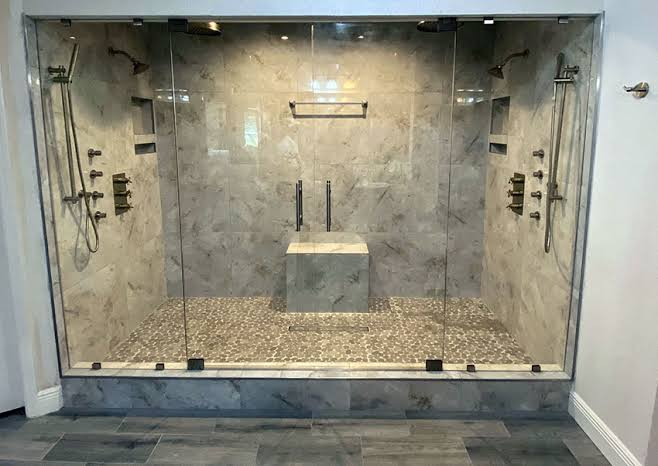
A shower door has to do two jobs at once: keep water contained and provide comfortable access. That sounds simple until the bathroom has a toilet next to the shower, a narrow walkway, an uneven wall, or limited floor space.
A swinging shower door can be an excellent choice where there is enough clearance for the door to move freely. Available in framed, semi-frameless, and frameless designs, these doors can suit everything from compact bathrooms to larger walk-in showers.
The layout should always come before the style.
Start With Door Clearance
The main consideration with a swinging door is the area required for it to open.
Measure the space in front of the shower and identify anything that could interfere with the door, including:
- Toilets
- Vanities
- Cabinets
- Towel rails
- Walls
- Other bathroom doors
A door that looks perfect in a showroom may be impractical in a small bathroom if its swing conflicts with another fixture.
Some designs can open inward, outward, or in both directions, depending on the hardware and enclosure configuration.
Hinged and Pivot Doors Are Different
The terms are sometimes used interchangeably, but the hardware can differ.
A hinged shower door generally rotates around hinges mounted along one side of the glass.
A pivot door uses a pivot mechanism positioned at the top and bottom, allowing the door to rotate around a specific point.
The difference can affect the amount of clearance required and the way the door operates.
The enclosure manufacturer or installer can recommend the appropriate configuration based on the opening.
Frameless Doors Keep the Bathroom Open
A frameless swinging shower door uses minimal visible metalwork and relies on appropriately specified glass and hardware for support.
This creates a cleaner appearance and keeps more of the surrounding tile visible.
Frameless doors work particularly well in bathrooms where the owner wants a simple, uncluttered design.
They do require accurate measurements and proper wall preparation because there is less framing available to accommodate irregularities.
Framed Doors Remain Practical
A framed shower door uses metal profiles around the glass.
Although the appearance is more substantial, framing can provide additional support and may offer practical advantages in certain installations.
Framed systems are available in various finishes, so they can be matched with other bathroom fittings.
They can also be suitable where wall conditions or enclosure dimensions make a fully frameless installation less appropriate.
Choose the Right Glass
Shower doors generally use safety glazing designed for bathroom applications.
The appropriate glass thickness and type depend on the door dimensions, hardware, enclosure design, and applicable requirements.
Clear glass is a popular option because it keeps the shower visually open.
Obscured or textured glass can provide greater privacy while still allowing light into the enclosure.
Glass selection should be based on more than appearance. Safety, weight, maintenance, and compatibility with the hardware all matter.
Water Control Starts With Door Position
A shower door should not be expected to contain water on its own.
The showerhead should be positioned so that water is directed away from the door opening whenever possible.
The door’s seals, threshold, shower tray, drainage, and surrounding panels all contribute to water management.
A door that swings outward can also release small amounts of water onto the bathroom floor if the shower area has not been designed correctly.
Planning these details together helps reduce unwanted splashing.
Single Doors Work Well in Many Bathrooms
A single swinging door can be a straightforward solution for a shower positioned in an alcove or between two walls.
It provides a wide opening without requiring a track across the shower entrance.
The door width should be large enough for comfortable access but still allow adequate clearance for opening.
The exact dimensions depend on the enclosure and the available room.
Double Swinging Doors Create a Wider Opening
Larger shower openings may accommodate two doors.
Double doors can provide generous access while keeping the overall enclosure relatively simple.
However, the combined movement of both panels requires careful planning.
The doors should have sufficient clearance and should not interfere with bathroom fixtures.
Bathroom Size Should Guide the Decision
A swinging shower door can work extremely well in a spacious bathroom but may create problems in a compact one.
For smaller rooms, a sliding or bi-fold enclosure may be more practical because the door does not project as far into the bathroom.
This does not mean swinging doors are unsuitable for small bathrooms. It simply means the available clearance needs to be measured before committing to the design.
See also: Why Smart Businesses Treat Commercial Maintenance Services as a Business Priority
Hardware Makes a Difference
Hinges, handles, brackets, seals, and other hardware affect both appearance and performance.
Common finishes include chrome, brushed metal, black, and brass tones.
The hardware should be compatible with the glass and designed for repeated exposure to moisture.
Quality hinges are particularly important because they carry the weight of the door throughout its operating life.
Walls Need to Be Suitable for Installation
Glass shower doors require secure mounting points.
The wall structure needs to be capable of supporting the hardware and glass. Tile thickness and wall irregularities also need to be considered during installation.
If the wall is significantly out of plumb, the installer may need to use specific hardware or adjustment methods to achieve proper alignment.
A new door should not simply be installed over an unstable or damaged substrate.
Cleaning Is Easier Without Tracks
One advantage of a swinging door is the absence of a floor track found on many sliding systems.
Without a track collecting water, soap residue, and debris, cleaning around the shower entrance can be simpler.
Clear glass still requires regular maintenance, particularly in areas with hard water.
Wiping the glass after use can reduce mineral deposits and help maintain its appearance.
Consider the Door’s Direction of Opening
The direction of swing can affect everyday convenience.
An outward-opening door generally provides easier emergency access and avoids taking up space inside the shower, but it requires sufficient clearance outside.
An inward-opening arrangement may work in certain layouts but must comply with the applicable safety requirements and allow adequate access.
Some hardware permits both directions, although this depends on the enclosure design.
Professional Installation Helps Prevent Problems
Glass shower doors are heavy, and installation requires accurate alignment.
The hinges need to be securely fixed, the glass correctly supported, and the seals positioned properly.
An incorrectly installed door may sag, scrape against the floor, fail to close properly, or allow water to escape.
Professional measurement is particularly useful for frameless doors and custom-sized enclosures.
Choose Based on How the Bathroom Works
The best swinging shower door is not necessarily the one with the most elaborate glass or hardware.
The decision should start with the available space, door clearance, shower position, glass specification, waterproofing, and everyday access.
Once those practical requirements are established, the frame style, glass finish, handle design, and hardware can be selected to suit the bathroom.
A properly planned swinging door can provide a wide, comfortable entrance while keeping the shower area visually clean and easy to maintain.